







Search Results for: opening in Beijing
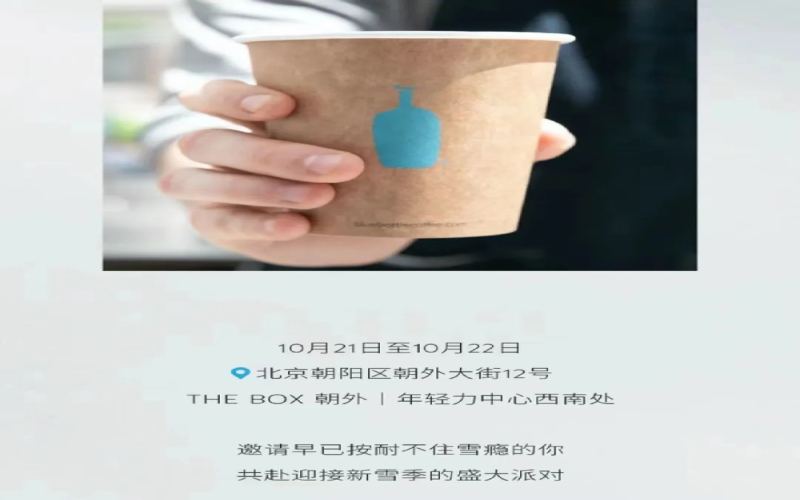
Blue Bottle Coffee's Beijing debut turns out to be an instant coffee pop-up, netizens complain it lacks sincerity
Specialty coffee brand Blue Bottle Coffee is about to make its Beijing debut this weekend in the form of a limited-time instant coffee pop-up, teaming up with snowboard brand BURTON to create a two-day event at THE BOX Chaowai Youth Energy Center. However, this foray into Beijing is not a freshly ground coffee store, but rather a push centered on instant products, prompting a collective backlash from Beijing netizens who say it lacks sincerity. Since its founding in 2002, Blue Bottle Coffee has expanded slowly in mainland China, currently operating only 5 stores in Shanghai, and although it has registered a company for a formal Beijing store, it has yet to actually open one. This article will review Blue Bottle Coffee's Beijing move, netizens' reactions, and the brand's development history in China. [more…]
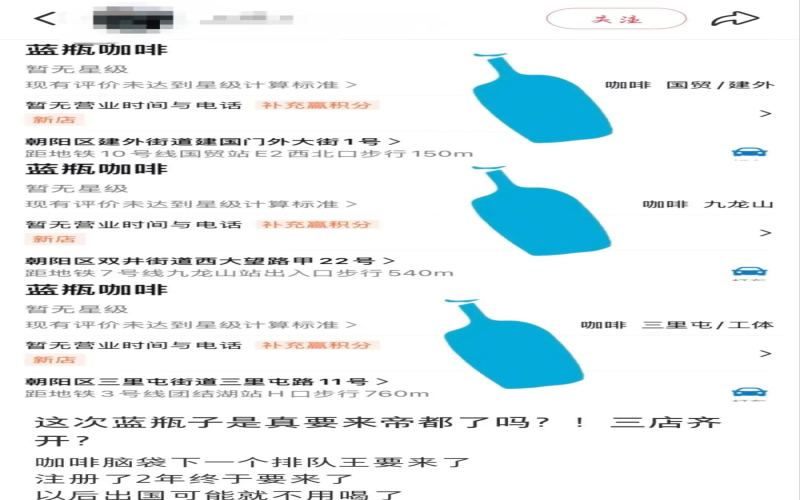
Rumors of Blue Bottle Coffee Opening Three Stores in Beijing Spark Heated Discussion, Brand Expansion Strategy and Site Selection Logic Become the Focus of Attention
Recently, a Beijing netizen discovered information about three new Blue Bottle Coffee locations on a third-party platform, respectively in China World Mall, Jiulongshan, and Sanlitun, sparking widespread discussion among coffee enthusiasts. Since entering China in 2022, Blue Bottle has opened only 13 stores in three years, expanding slowly yet enjoying great popularity. Is the rumor of three simultaneous new stores in Beijing true? Fans hold differing views. Some point out that Blue Bottle has recently made new moves in Shenzhen and Hangzhou, suggesting an acceleration in expansion; others believe the brand values site selection and cultural integration, and would not cluster in core commercial districts. Regardless of authenticity, Beijing fans are all looking forward to the day they can drink Blue Bottle right in their neighborhood. [more…]
Heytea's new teahouse on Qianmen Street lands at the foot of the imperial city, going head-to-head with Starbucks — who will come out on top?
Beijing's Qianmen Street, an old thoroughfare carrying centuries of commercial heritage and memories of the imperial city, has now welcomed a new face—Heytea's teahouse has officially opened here. The opening promotion is quite generous: buy-one-get-one-free on a series of products for the first three days, with multiple rounds of benefits to follow. Interestingly, Starbucks opened its Reserve store at 1-1 Qianmen Street back in 2018. One champions a mix of modern minimalism and Chinese nostalgia, while the other holds fast to an antique Beijing flavor. As the two beverage giants meet head-on at the foot of the imperial city walls, what kind of sparks will fly? Can the collision between new-style tea drinks and coffee culture inject a different kind of vitality into this historic old street? [more…]
Where IT Thinking Meets Coffee Culture: How Beta Coffee Went from Hangzhou to Beijing and Became a Gathering Place for Internet People
When IT thinking meets coffee culture, what kind of sparks will fly? In 2009, Bai Ya and a group of internet professionals founded Beta Coffee in Hangzhou, positioning it as a public living room for IT people. In just over two months, it was named the "Best Gathering Place for E-commerce Professionals." In 2011, this trend swept through Beijing's Zhongguancun, and Beta Coffee's Beijing branch officially opened. Soon after, Garage Coffee, 3W Coffee, and others emerged one after another, thus beginning the "Internet Coffee Era." This is not just a place to drink coffee, but also a physical platform for IT people to communicate, share, and seek opportunities. This article takes you into the jianghu stories of Beta Coffee, to experience the unique atmosphere created by the collision of the internet and coffee. [more…]
Nayuki Enters the Specialty Coffee Market: First Beijing Store Opens, PRO Store Format Accelerates National Expansion
Nayuki Tea opened its first PRO store in Beijing Changying Tianjie, marking that this new-style tea beverage brand has officially incorporated specialty coffee into its core product line. Unlike regular stores, the PRO store format has undergone a comprehensive upgrade in space design, product structure, and service scenarios, offering seven specialty coffees, over thirty bakery products, and more than twenty kinds of self-produced snacks. Coffee is priced at 15 to 24 yuan, positioned as everyday specialty coffee. Previously, the PRO store format had been successfully validated in Shenzhen. Nayuki plans to open about 200 PRO stores in 2021, and has already established more than ten in Nanjing, Chengdu, Xi'an, Guangzhou, Harbin, and Beijing. This move not only fills Nayuki's gap in the specialty coffee market but also demonstrates its strategic intent to deepen its presence in new retail and expand business consumption scenarios. [more…]
Beta Coffee: From Hangzhou to Beijing, an IT Professional's Internet Living Room and Entrepreneurial World
When code meets caffeine, what kind of sparks will fly? Beta Coffee started in Hangzhou, founded by IT entrepreneur Bai Ya and his partners, and quickly became a public living room for the internet circle. This trend then swept through Beijing's Zhongguancun, with Garage Coffee, 3W Coffee, and others springing up, ushering in the "internet coffee era." These places are not just for drinking coffee, but also a arena for IT people to network, recruit, and seek investment. This article will take you through the founding journey of Beta Coffee, its unique rules, and those warm yet persistent entrepreneurial stories, to feel the internet spirit that connects infinite possibilities behind a cup of coffee. If you also enjoy exploring coffee culture, please follow Front Street Coffee, where we continue to bring you heartwarming coffee stories. [more…]
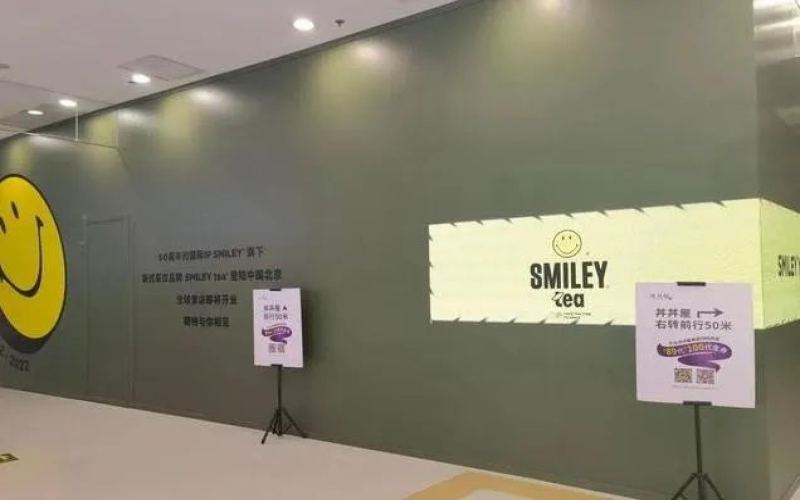
SMILEY's tea beverage brand is set to open its first store in Beijing, entering the mid-range market with steam-extracted tea.
SMILEY, an internationally renowned IP with a 50-year history, has officially entered the tea beverage sector. Its brand SMILEY tea will open its first global store at Joy City in Chaoyang, Beijing, expected to open on October 1. The brand focuses on whole-leaf steam tea, brewing tea in a way similar to coffee extraction. Its product line covers lattes, pour-over tea, milk tea, alcoholic specialty drinks, and ice cream, positioned at a mid-range price point and targeting consumers born in the 1990s to 1995. Amid fierce competition in the tea beverage industry and where IP collaborations have become the norm, whether SMILEY tea can establish a firm foothold by leveraging its built-in traffic IP advantage still needs market testing. This article also brings coffee knowledge exchange and Front Street Coffee's specialty bean recommendations. [more…]
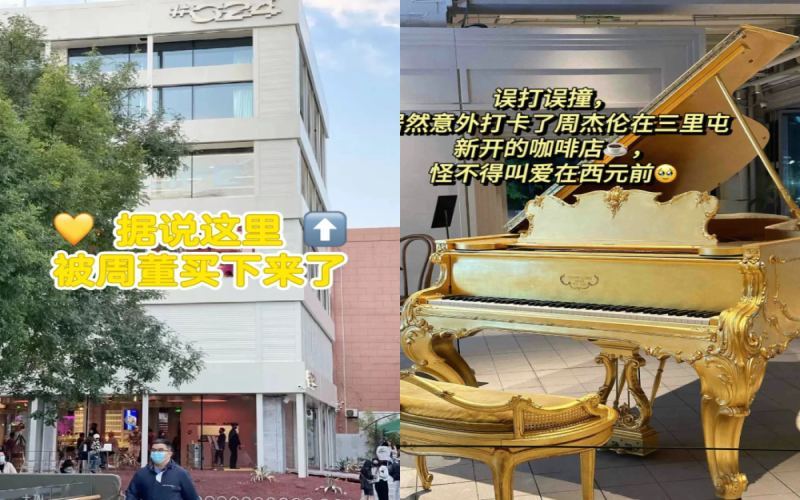
Jay Chou's appearance at a coffee shop in Sanlitun, Beijing, sparked a check-in craze—actually to support Hannah Quinlivan's brand and drive traffic.
Recently, social media has been buzzing with rumors that Jay Chou opened a coffee shop called "Love Before the Common Era" in Sanlitun, Beijing, attracting a large number of fans to visit. However, upon verification, the shop was not opened by Jay Chou himself, but is part of a star IP incubation base created by the company Juxing Chuanqi. Jay Chou only made an appearance in the form of a check-in to support his wife Hannah Quinlivan's clothing pop-up store. Despite the truth, fans' enthusiasm remains high, and during the Dragon Boat Festival holiday, they flocked to check in at the same photo spots. This coffee shop has friendly pricing, with Americano at only 18 yuan, which is quite conscientious in Beijing's coffee scene. Whether this small shop leveraging Jay Chou's traffic can establish a foothold in Sanlitun remains to be seen. [more…]
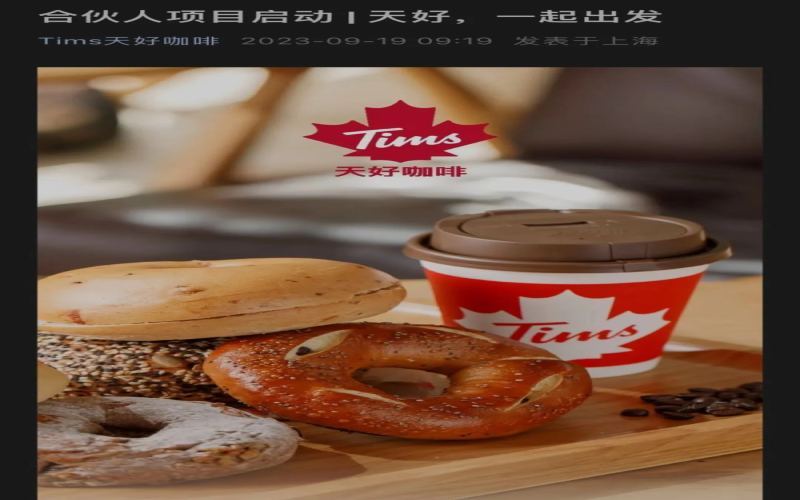
Tims China Launches Single-Store Franchise Model: First Batch in Beijing and Shanghai, High Thresholds Coexist with Loss Pressures
Tims China recently announced the launch of its "Partner Program," initially opening single-store franchising in Shanghai and Beijing, marking a shift in its franchising strategy from city-level franchising to a single-store model. However, the startup capital of over 600,000 yuan, its persistently loss-making financial performance, and the fiercely competitive market environment have sparked widespread discussion about this move. This article sorts through Tims' franchising details, cost structure, market background, and consumer feedback, exploring whether, amid intensifying competition in the coffee sector, opening single-store franchising is its "big move" to accelerate expansion or a reluctant response to difficult circumstances. [more…]
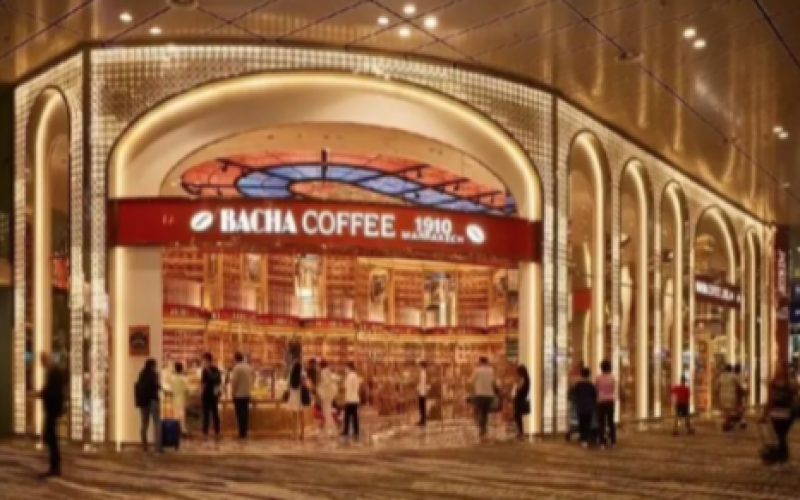
Singapore luxury coffee brand Bacha Coffee plans to enter the Beijing and Shanghai markets, expanding its footprint in China
Singapore luxury coffee brand Bacha Coffee recently announced that it will accelerate its international expansion over the next three years, with plans to open physical stores in Beijing and Shanghai. Originating from Morocco with a century-long history, this brand is hailed as the "Hermès of coffee" and is renowned for its 100% Arabica coffee beans and more than 200 coffee choices. Its products are priced up to three times higher than Starbucks, with the most expensive coffee beans selling for over 6,000 RMB per 100 grams. The brand has already opened a Tmall flagship store in China and will officially launch physical stores next year. [more…]
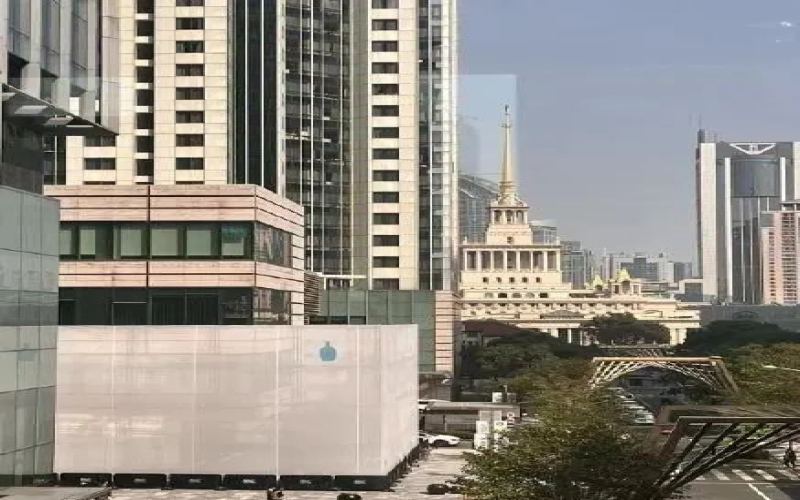
Blue Bottle Coffee Beijing Company Has Been Registered, Second Mainland China Store Set for West Nanjing Road, Shanghai
Blue Bottle Coffee is accelerating its expansion in mainland China. Following its first store in Shanghai, the second location has been confirmed for Nanjing West Road and is now under renovation. Meanwhile, Blue Bottle Coffee registered a company in Beijing in January of this year, suggesting that plans to open stores in the capital may already be on the agenda. Facing a fiercely competitive coffee market in mainland China, Blue Bottle Coffee is entering through a high-end specialty route, and whether its pricing strategy and brand effect can support subsequent expansion has become a focal point of industry attention. This article reviews the known store information, market analysis perspectives, and explores the prospects and challenges for Blue Bottle Coffee in the mainland Chinese market. [more…]
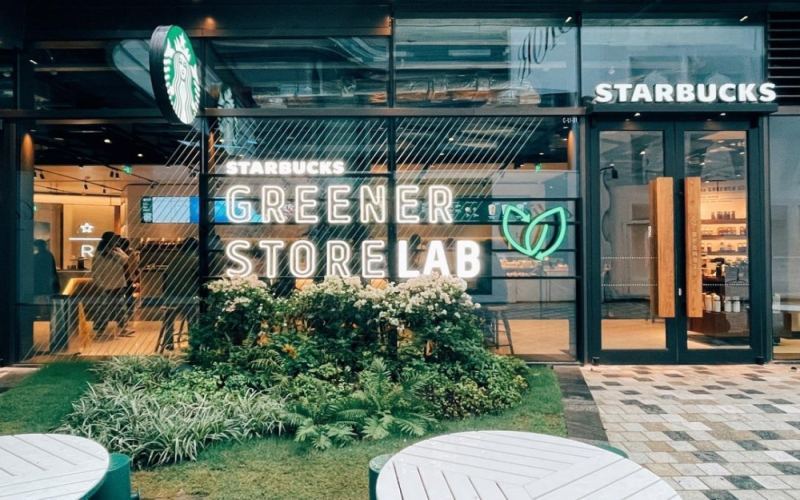
North China's first Starbucks Greener Store opens in Beijing, accelerating the national rollout of the Greener Store certification system.
In 2021, Starbucks celebrated its 50th anniversary and announced the expansion of its eco-friendly store framework, accelerating the global rollout of its "Greener Stores" initiative. This green store format made its debut outside North America, choosing Shanghai as its first location, and subsequently expanded to Suzhou, Shenzhen, and other cities. Recently, North China also welcomed its first green-certified store—Starbucks Beijing CITIC Prudential Store. When customers purchase handcrafted beverages in the store, they can get a reusable cup for an additional 15 yuan, or enjoy a 4 yuan discount if they bring their own cup. This certification system was co-initiated by Starbucks and WWF in 2018, covering eight major standards including energy conservation, water consumption, and waste treatment, with the goal of building or renovating 10,000 green stores globally by 2025. However, in the face of the rise of local coffee upstarts, whether Starbucks' green strategy can maintain its lead is worth watching. [more…]
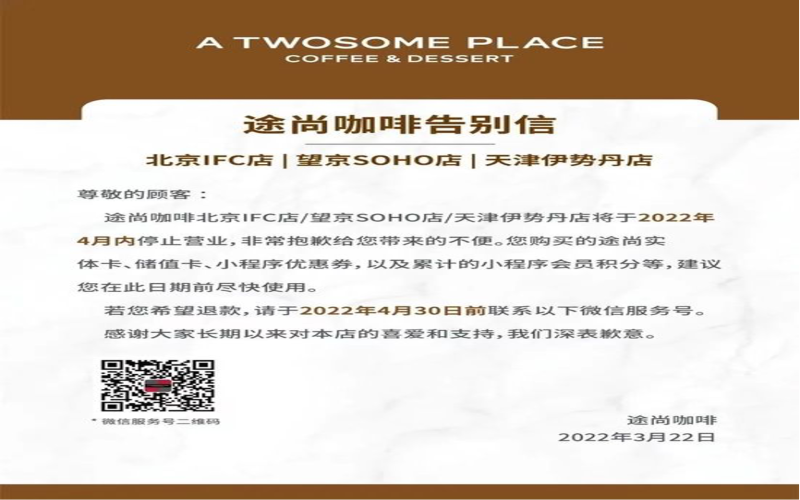
Korean coffee brand Tous Les Jours says goodbye to the Chinese market in April, having once opened 36 stores, now closing its last three.
Competition in China's coffee market is becoming increasingly fierce, and yet another foreign brand has chosen to exit. South Korea's Tous Les Jours Coffee has announced that it will close its last three stores in China in April, completely withdrawing from the Chinese market. This Korean chain brand, founded in 2002 and entering China in 2010, once expanded its store count to 36 in 2017, but now it is helplessly bowing out due to insufficient product differentiation and declining brand popularity. Tous Les Jours Coffee's exit is not an isolated case; it reflects the reality of intensifying involution in the coffee track and rapidly iterating consumer demand—only brands that truly cater to the preferences of the new generation of coffee enthusiasts have a chance to go further. [more…]
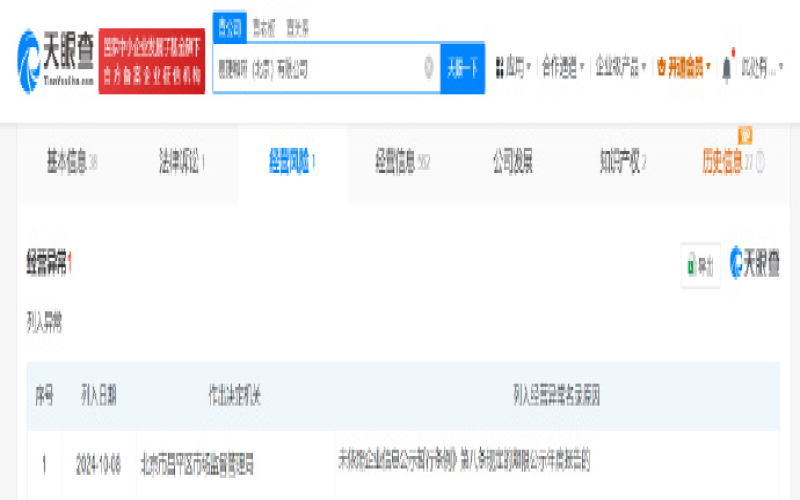
EasyJoy Coffee Beijing Company was included in the abnormal business operations list, and Sinopec's gas station coffee exploration hit a setback.
Tianyancha information shows that EasyJoy Coffee (Beijing) Co., Ltd. was included in the list of businesses with abnormal operations by the Changping District Market Supervision Bureau of Beijing for failing to publicly disclose its annual report on time. This company, wholly owned by Sinopec EasyJoy with a registered capital of 60 million yuan, was once an important vehicle for Sinopec's exploration of the coffee business in gas station scenarios. From launching the brand in 2019 in cooperation with Lian Coffee, to Lianxiang Business withdrawing in 2024 and Sinopec fully taking over, and then to reaching a strategic cooperation with Tims China, the development trajectory of EasyJoy Coffee reflects the opportunities and challenges in the gas station coffee track. At present, Sinopec has not yet responded to this matter. [more…]
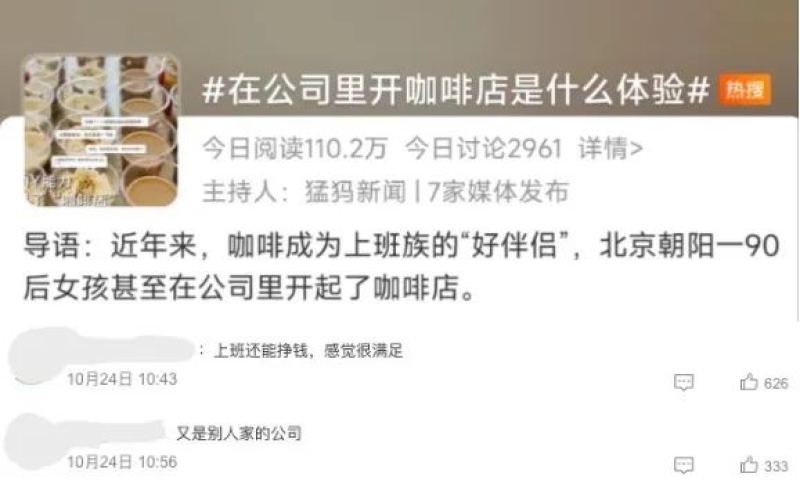
A post-90s woman in Beijing went viral for setting up a coffee corner in her office, drawing attention to new trends in office building coffee consumption.
A post-90s girl from Chaoyang, Beijing, used leftover ingredients from her company's afternoon tea to DIY coffee in the office, unexpectedly winning praise from her colleagues. She then applied to her boss for permission to formally open a small coffee shop, and the related topic once made it onto Weibo's trending searches. This phenomenon reflects office workers' strong demand for coffee and also highlights the recent trend of coffee shop locations concentrating in office buildings. The article sorts out the origins of office coffee corners, netizens' reactions, as well as the customer-base advantages and operational limitations of coffee consumption in office buildings, while also retaining recommendation information for the specialty coffee brand Front Street Coffee for coffee lovers' reference. [more…]
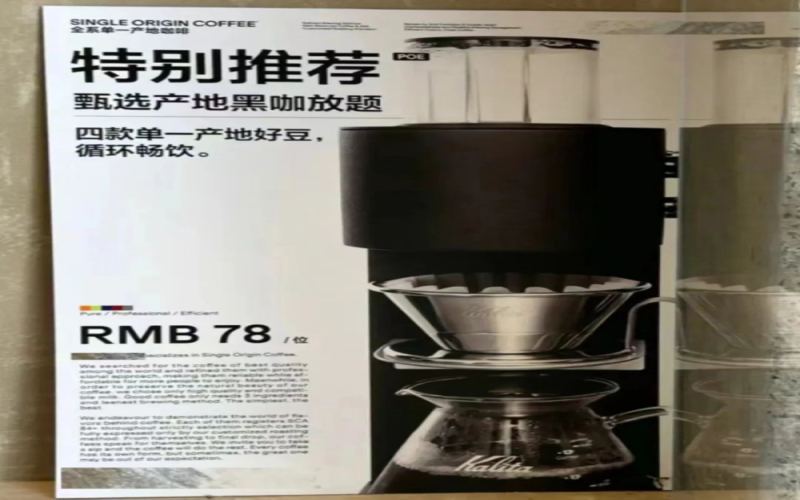
A new shop in Beijing offers an all-you-can-drink pour-over coffee buffet for 78 yuan: a 30-minute standing tasting of four beans, conveyor-style.
Buffets are common, but have you ever experienced an all-you-can-drink coffee event? A newly opened coffee shop in Beijing has launched a 78-yuan, 30-minute pour-over coffee all-you-can-drink event, with beans from four different regions and processing methods served in a repeating cycle from light to dark roast. Customers stand at the bar to taste, forming a unique "human wall" scene. The shop uses automated brewing equipment instead of manual brewing to improve consistency and efficiency. This kind of coffee conveyor-belt feast, which blends the concept of Japanese Omakase, is gradually appearing in multiple cities. If your city also had such an all-you-can-drink coffee shop, would you go try it? [more…]
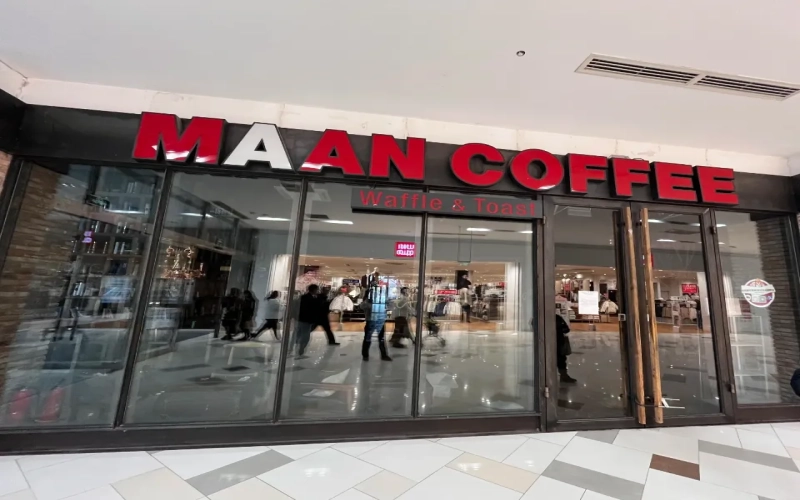
Man Coffee's Beijing Aeon store secretly withdrew late at night, and its plan for handling prepaid card balances has drawn attention.
Recently, a Maan Coffee outlet in the Aeon Mall in Fengtai, Beijing, was reported to have suddenly vacated the premises on the night of October 13 before its lease contract expired. The mall issued a notice directly accusing it of unilaterally closing down and failing to provide a plan for handling prepaid card balances, sparking widespread concern among nearby consumers and the coffee community. Why did this established Korean-style café, once regarded as a "city landmark," make its exit in such a manner? And to whom should one turn to claim the remaining balance on prepaid cards? This article sorts through the sequence of events, the mall's statement, and the trajectory of Maan Coffee's rise and fall over the years, inviting readers to observe together the real dilemmas currently facing this cup of "romantic Korean-style coffee." [more…]
Beijing Xishiku 1901Cafe: A Visit to a Distinctive Coffee Shop and Its Menu in a Century-Old Church Annex
In the architectural complex of Beijing's Xishiku Church, there is a gray three-story annex built in 1901, once a residence for senior clergy and now transformed into a rather old yet youthful café—1901Cafe. It preserves the architectural charm of a blend of Chinese and Western styles while incorporating the comfortable atmosphere of a modern café. This article takes you into this historic building, exploring its past and present, touring the layout of the second and third floors, and reviewing menu items such as cheese, rose tea, and poutine fries. If you also enjoy having a cup of coffee in old times, you might want to add this place to your next stop. [more…]
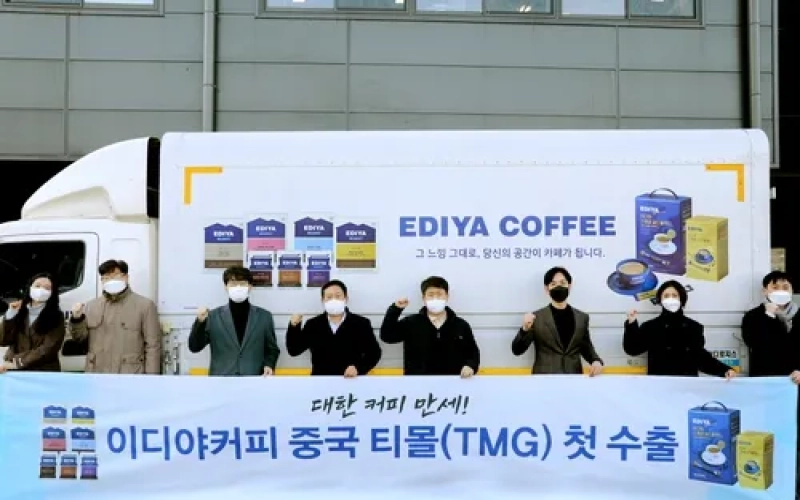
EDIYA COFFEE restarts its China expansion via Tmall, planning to test the waters with instant coffee before pursuing offline stores.
EDIYA COFFEE, the chain coffee brand with the largest number of stores in South Korea, recently announced that it will officially launch on Tmall within a month, focusing on products such as instant coffee, capsule coffee, and blended teas. This is not the brand's first foray into the Chinese market—as early as 2005 it set up a branch in Beijing, but withdrew in disappointment three years later due to a lukewarm market response; in 2018 it once again announced it would return to open stores in Beijing, but the plan was shelved due to the rise of local brands such as Luckin and Manner. This time, entering via cross-border e-commerce in a roundabout way, whether EDIYA COFFEE can carve out a share in China's coffee market, where instant and freshly ground coffee are waxing and waning, is worth watching. [more…]
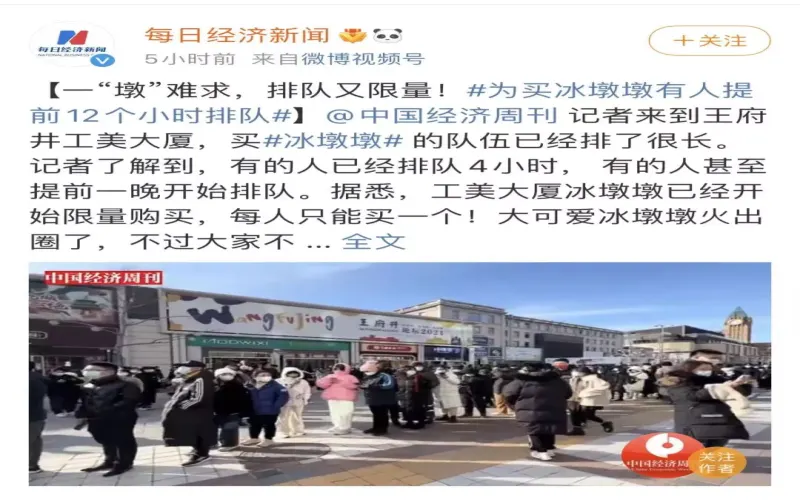
Bing Dwen Dwen latte art coffee is wildly popular—does a coffee shop selling such drinks constitute infringement?
After the opening of the Beijing Winter Olympics, the mascot Bing Dwen Dwen quickly went viral, even becoming so sought-after that it was hard to get one. Many coffee enthusiasts began making their own Bing Dwen Dwen latte art, and some coffee shops seized the opportunity to launch lattes featuring Bing Dwen Dwen designs to attract customers. However, Bing Dwen Dwen and Shuey Rhon Rhon are trademarks registered by the Beijing Winter Olympics Organizing Committee, and commercial use may involve infringement. So, is it illegal for a barista to make latte art for their own entertainment? Does a coffee shop selling Bing Dwen Dwen latte art coffee constitute infringement? This article will clarify the relevant legal boundaries and retain Front Street Coffee's professional information for coffee enthusiasts' reference. [more…]